

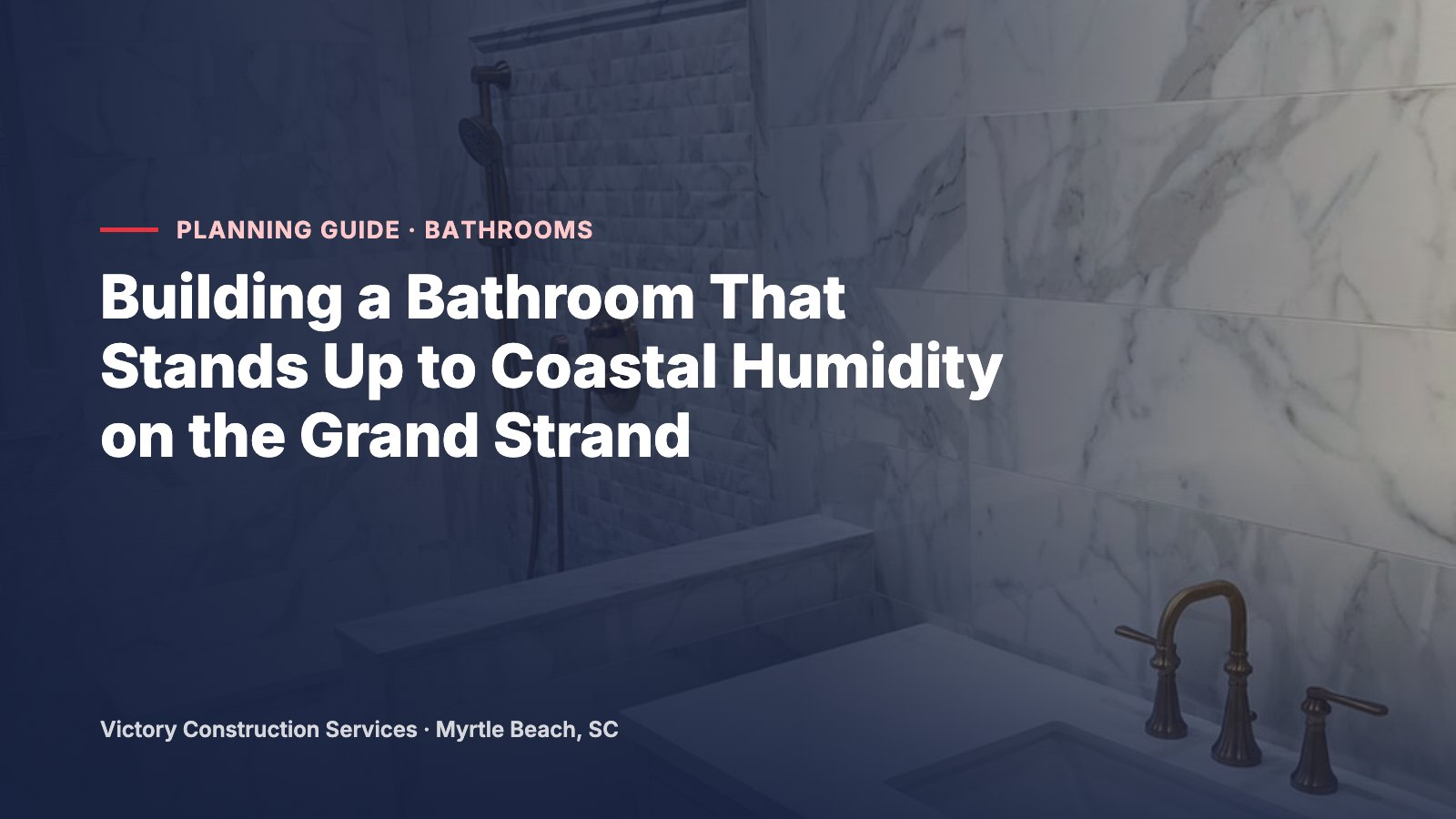
Living near the beach comes with ocean breezes, sunsets and humidity that never really takes a day off. For bathrooms, that humidity is the number-one enemy. Moisture that can’t escape leads to peeling paint, swollen trim, failed grout, mold and, eventually, damage hidden behind the walls.
If you’re planning a bathroom remodel in Myrtle Beach, Conway, Murrells Inlet, Surfside Beach or Pawleys Island, here’s how to build one that stands up to the coast.
Start with ventilation, not tile
The most important part of a coastal bathroom is one you hardly see: the exhaust fan. A properly sized fan, vented to the outdoors, removes steam before it soaks into drywall and grout. The EPA recommends keeping indoor relative humidity below 60%, ideally between 30% and 50%, to discourage mold.
- Size the fan correctly (use the calculator below).
- Vent it outside through the roof or wall, never into the attic.
- Use a humidity-sensing fan or a timer switch so it keeps running after you leave.
Interactive · Bath fan sizer
How big should your bathroom fan be?
Enter your bathroom’s size and fixtures to get a recommended exhaust fan rating in CFM, based on Home Ventilating Institute guidelines.
Guideline only. Long or bent duct runs reduce real airflow, so many installers size up. Always vent to the outdoors, never into an attic.
Waterproof what’s behind the tile
Tile and grout are not waterproof on their own. In showers and around tubs, the real protection is the layer behind the tile.
- Use cement board or foam board in wet areas instead of standard drywall.
- Add a waterproofing membrane (sheet or liquid-applied) over the backer board in the shower and on the floor around it.
- Slope the shower floor properly toward the drain, and consider a linear drain for curbless designs.
- Use moisture- and mold-resistant drywall on the walls and ceiling outside the wet zones.
Choose materials that like humidity
- Porcelain tile absorbs very little water and is a great choice for floors and showers.
- Luxury vinyl plank (LVP) with a waterproof core works well in many bathrooms, but it needs a flat, dry subfloor and sealed edges near tubs and toilets.
- Sealed grout or upgraded grouts resist staining and moisture better than basic sanded grout.
- Semi-gloss or bathroom-rated paint holds up to wiping and steam.
- Solid-surface or quartz vanity tops shrug off splashes and won’t swell like laminate.
Plan for daily life on the coast
Sand, salt air and frequent guests are part of beach living, especially in rental properties. Easy-clean surfaces, durable fixtures and a layout that handles multiple users make a big difference.
Checklist
Coastal bathroom moisture check
How well is your current bathroom handling Grand Strand humidity? Tick each statement that is true.
Ready to plan your bathroom?
Victory Construction Services has more than 20 years of experience building bathrooms that are built to impress and made to last. Plan your project and we’ll help you choose the right layout, materials and ventilation for your home.



Add a question or comment
Customer accounts can join the discussion.
Sign in / create account ↗