We build ramps, zero-threshold showers and widened doorways for veterans and their families. As Veterans Day passes this week, we are thinking about the many men and women along the Grand Strand who served, and about what it means for a home to truly work for them. For a veteran living with a service-related injury or the effects of age, a house can either support independence or stand in the way of it. Thoughtful modifications can make the difference between struggling with a front step or a bathtub every day and moving through home safely and with dignity. VA home modification grants can help cover costs. Ask us how.
What Accessible Modifications Can Do
Accessibility work is about more than building codes. It is about letting someone live the way they want to live in their own home. The right changes can help a veteran:
- Enter and leave the house without help
- Bathe safely and privately
- Move from room to room with a wheelchair, walker or cane
- Reduce the risk of falls
- Stay in a familiar home and neighborhood longer
Many of these changes benefit the whole family as well, including aging parents, visiting grandchildren and anyone recovering from surgery.
Ramps
A ramp is often the first and most important modification, because the entrance is where many homes become inaccessible. A good ramp is planned carefully:
- Slope: Accessibility guidelines call for a gentle slope, which means a ramp is often longer than people expect. A raised coastal home may need a ramp with landings and switchbacks.
- Landings: Level resting and turning areas at the top, the bottom and at changes in direction.
- Handrails and edge protection: Sturdy rails on both sides and curbs or rails that keep wheels from slipping off the edge.
- Surface: Slip-resistant materials that stay safe when wet, which matters in our rainy, humid climate.
- Materials: Treated lumber, composite, concrete or aluminum, each with trade-offs in cost, durability and appearance. Near the ocean, corrosion-resistant fasteners are essential.
For homes that sit high above grade, a ramp may not be practical, and other options such as a platform lift may be worth discussing.
Zero-Threshold Showers
Stepping over a tub wall or a shower curb is one of the most common causes of falls at home. A zero-threshold, or curbless, shower lets someone roll or walk straight in. Building one correctly involves:
- Floor work: The shower floor must slope to the drain, which often means recessing the subfloor or adjusting framing.
- Waterproofing: A curbless shower depends on a well-designed waterproofing system and properly placed drains so water stays where it belongs.
- Linear or well-placed drains: These help water flow away without a curb to hold it back.
- Grab bars: Installed with solid blocking in the walls so they can bear real weight.
- Accessories: A fold-down or built-in bench, a handheld shower head on a slide bar and controls that can be reached while seated.
Slip-resistant tile, good lighting and enough clear floor space to turn a wheelchair complete the design.
Widened Doorways
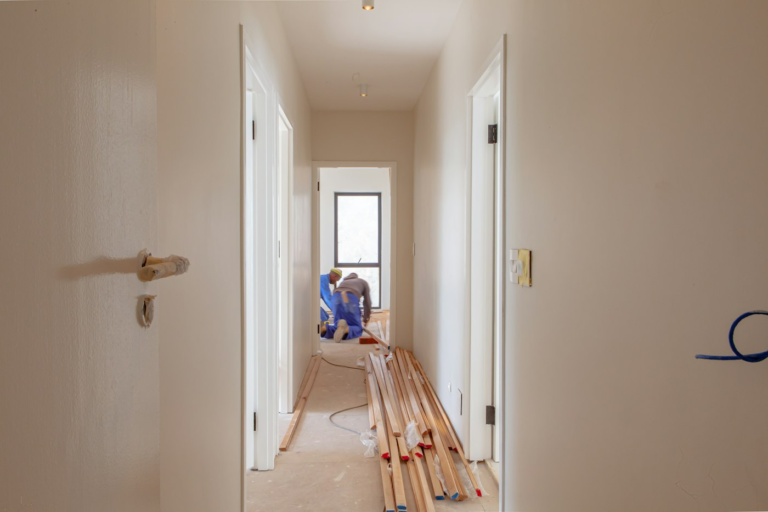
Standard interior doors in many homes are too narrow for a wheelchair or walker to pass through comfortably. Widening a doorway can involve:
- Removing and reframing the opening, which may require a new header if the wall is load-bearing
- Installing wider doors, pocket doors or barn-style doors to save space
- Using offset hinges, which can gain some clearance without reframing
- Replacing round knobs with lever handles that are easier to operate
- Smoothing or removing thresholds between rooms
Hallway width, turning space and the path between bedroom, bathroom and kitchen all matter, so we look at the whole route, not just one door.
How VA Home Modification Grants Can Help
The U.S. Department of Veterans Affairs offers several programs that can help eligible veterans pay for accessibility modifications. These include housing grants for veterans with certain service-connected disabilities, as well as a benefit available through VA health care for medically necessary home improvements and structural alterations. Eligibility, benefit amounts and the application process are set by the VA and depend on each veteran’s situation.
Some practical tips if you are exploring these programs:
- Contact the VA directly or speak with your VA health care team to learn which programs you may qualify for.
- Accredited veterans service officers can help with applications at no charge.
- Ask what documentation, estimates and approvals are required before work begins. Starting work before approval can affect eligibility for some programs.
- Keep copies of all paperwork, estimates and correspondence.
We are happy to walk through your home, talk about what modifications would help and provide the information you need for your application. The VA makes the eligibility decision, so it is always best to confirm details with them.
Other Modifications Worth Considering
- Lowered countertops or open space beneath sinks for seated use
- Pull-out shelves and accessible storage
- Rocker light switches and outlets at reachable heights
- Improved lighting in hallways, stairs and entries
- Stair rails on both sides and, where needed, stair lifts
- Comfort-height toilets with nearby grab bars
Next Steps for Veterans and Families
- Make a list of the daily tasks that are hardest at home right now.
- Talk with the VA or a veterans service officer about grant programs.
- Schedule a walkthrough so we can recommend practical, well-built solutions.
- Plan the work in stages if needed, starting with safety and entry.
To every veteran on the Grand Strand: thank you for your service. Victory Construction serves Myrtle Beach and the Grand Strand. Call us to talk through your project.