
Coastal crawlspaces trap moisture year-round. Encapsulation, vapor barriers and dehumidifiers prevent mold and rot. Inspect yours before winter. The space beneath your floors is one of the most important and least visited parts of your house. On the Grand Strand, where humidity stays high for much of the year and the water table can sit close to the surface, a crawlspace can quietly become damp, musty and hospitable to mold, rot and pests. Because much of the air in a house can move up from the crawlspace into the living areas, what happens down there affects comfort, air quality and the health of the structure above it.
Why Coastal Crawlspaces Get So Damp
Several forces work together to keep crawlspaces wet in our area:
- Humid outside air. Traditional vented crawlspaces let outside air in. In warm months, that humid air meets cooler surfaces under the house, such as ductwork, pipes and the underside of the floor, and condenses into water.
- Ground moisture. Bare soil constantly releases water vapor, especially in low-lying areas or near marshes and waterways.
- Poor drainage. Gutters that dump water at the foundation and soil that slopes toward the house send rainwater straight into the crawlspace.
- Plumbing and HVAC. Leaky pipes, sweating ducts and condensate lines that drain under the house all add moisture.
Because our coastal climate is humid for so much of the year, these problems are not seasonal. They are a year-round condition that needs a year-round solution.
What Moisture Does Under Your House
Excess moisture in a crawlspace leads to a predictable chain of problems:
- Mold and mildew grow on wood framing, insulation and stored items, often producing a musty smell that can drift into the home.
- Wood rot weakens floor joists, sill plates and subflooring, leading to soft, bouncy or sagging floors.
- Insulation failure occurs when fiberglass batts absorb water, sag and fall, losing their insulating value.
- Pest activity increases, since termites and other insects are attracted to damp wood.
- Higher energy bills result when the HVAC system works harder against humid, poorly insulated floors and ducts.
- Corrosion affects ductwork, hangers, fasteners and electrical components.
The Three Main Solutions
Vapor barriers
A vapor barrier is a durable plastic sheet laid over the crawlspace floor to block ground moisture from rising into the space. It is the most basic level of protection. For best results, the seams should overlap and be taped, and the barrier should extend up the foundation walls and piers rather than simply lying loose on the ground. A torn, partial or loosely laid barrier provides much less protection.
Encapsulation
Encapsulation goes further. The entire crawlspace, including the floor, walls and piers, is sealed with a heavy-duty liner. Vents to the outside are typically closed and sealed, and the space is treated as part of the home’s conditioned envelope. Encapsulation keeps humid outside air and ground moisture out, which can significantly improve conditions under the house. Encapsulation design must account for local code requirements, termite inspection access, and how the space will be dried and conditioned.
Dehumidifiers
Once a crawlspace is sealed, moisture still needs to be managed. A dehumidifier designed for crawlspaces removes water from the air and keeps humidity at a safe level. Some systems instead use a small amount of conditioned air from the HVAC system. A dehumidifier needs a proper drain line and occasional maintenance, such as filter cleaning.
Supporting Fixes That Make the System Work
Encapsulation and dehumidifiers are most effective when the underlying causes of moisture are addressed too:
- Clean gutters and extend downspouts away from the foundation.
- Regrade soil so water drains away from the house.
- Repair plumbing leaks and insulate cold water lines that sweat.
- Seal and insulate ductwork running through the crawlspace.
- Redirect HVAC condensate lines so they do not drain under the house.
- Replace damaged, wet insulation and repair any rotted framing.
- Remove debris, scrap wood and cardboard that attract pests.
If mold is present, it should be addressed properly before the space is sealed. For significant mold growth, a qualified remediation professional may be needed.
How to Inspect Your Crawlspace
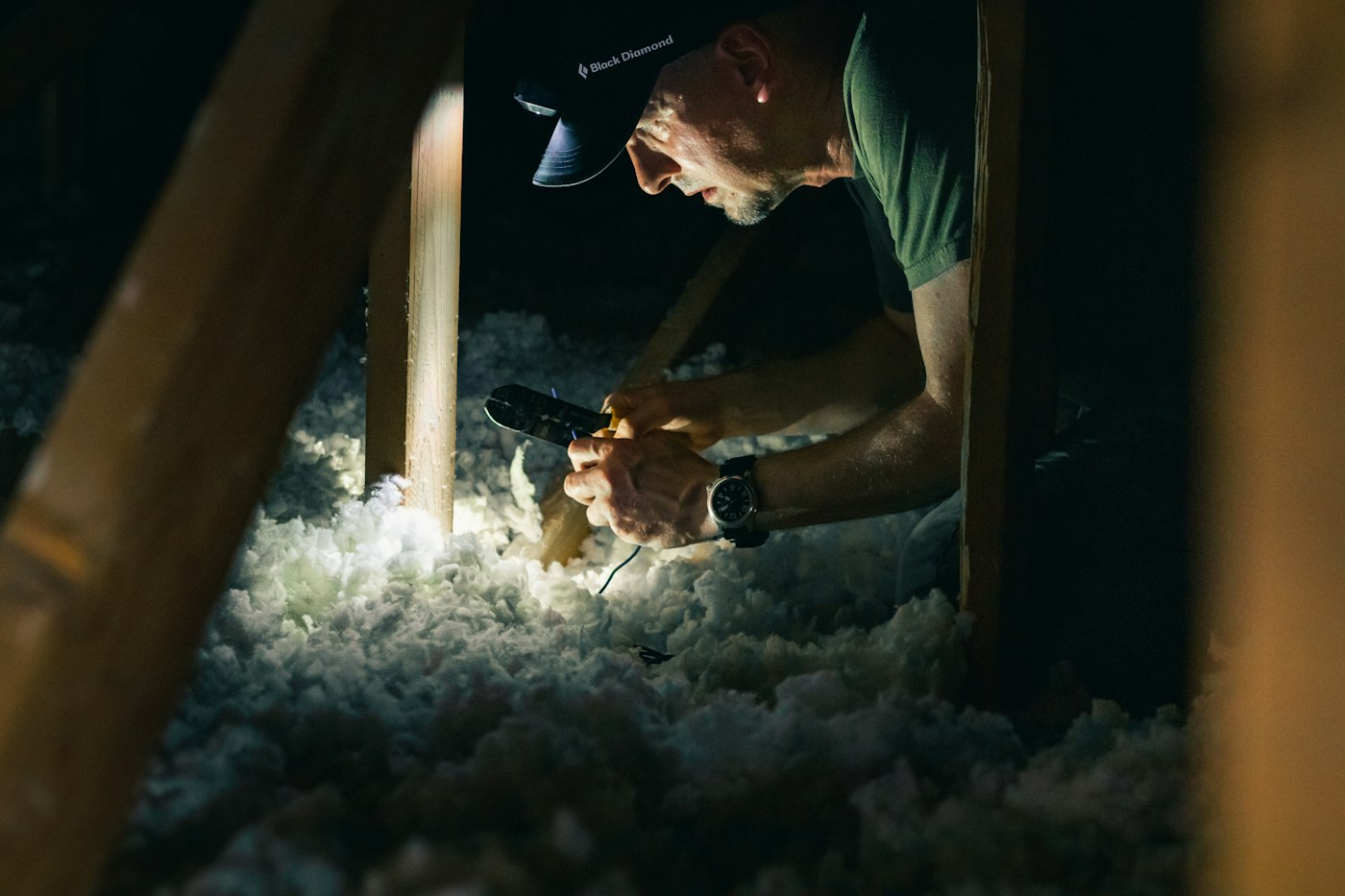
If you are comfortable doing so, and the space is safe to enter, a quick look can tell you a lot. Wear protective clothing, gloves and a mask, bring a bright flashlight and let someone know you are going under. Look for:
- Standing water or wet soil
- Musty or moldy smells
- White, green or black growth on wood
- Sagging or fallen insulation
- Soft, dark or crumbling wood
- Mud tubes on piers or foundation walls, which can indicate termites
- Condensation on ducts or pipes
- A torn, missing or partial vapor barrier
If you would rather not go under the house, or if you see signs of trouble, a professional inspection is the safer route. We can assess the crawlspace and recommend the right level of moisture control for your home.
Why Before Winter Is the Right Time
Late fall and winter are often a good time to address crawlspace issues. Cooler weather makes working under the house more comfortable for crews, and repairs made now mean the space will be dry and protected before the heat and humidity of next spring and summer. Addressing moisture before winter rains also helps prevent water from collecting under the house during the wet months.
What to Do This Month
- Check your gutters and downspouts and correct any water dumping at the foundation.
- Look or have someone look inside your crawlspace for moisture, mold or damage.
- Note any musty smells inside the house, especially near floor vents.
- Schedule a crawlspace inspection to discuss vapor barriers, encapsulation and dehumidification.
Victory Construction serves Myrtle Beach and the Grand Strand. Call us to talk through your project and get your crawlspace dry and protected before winter.